Container Vulnerability Scanning
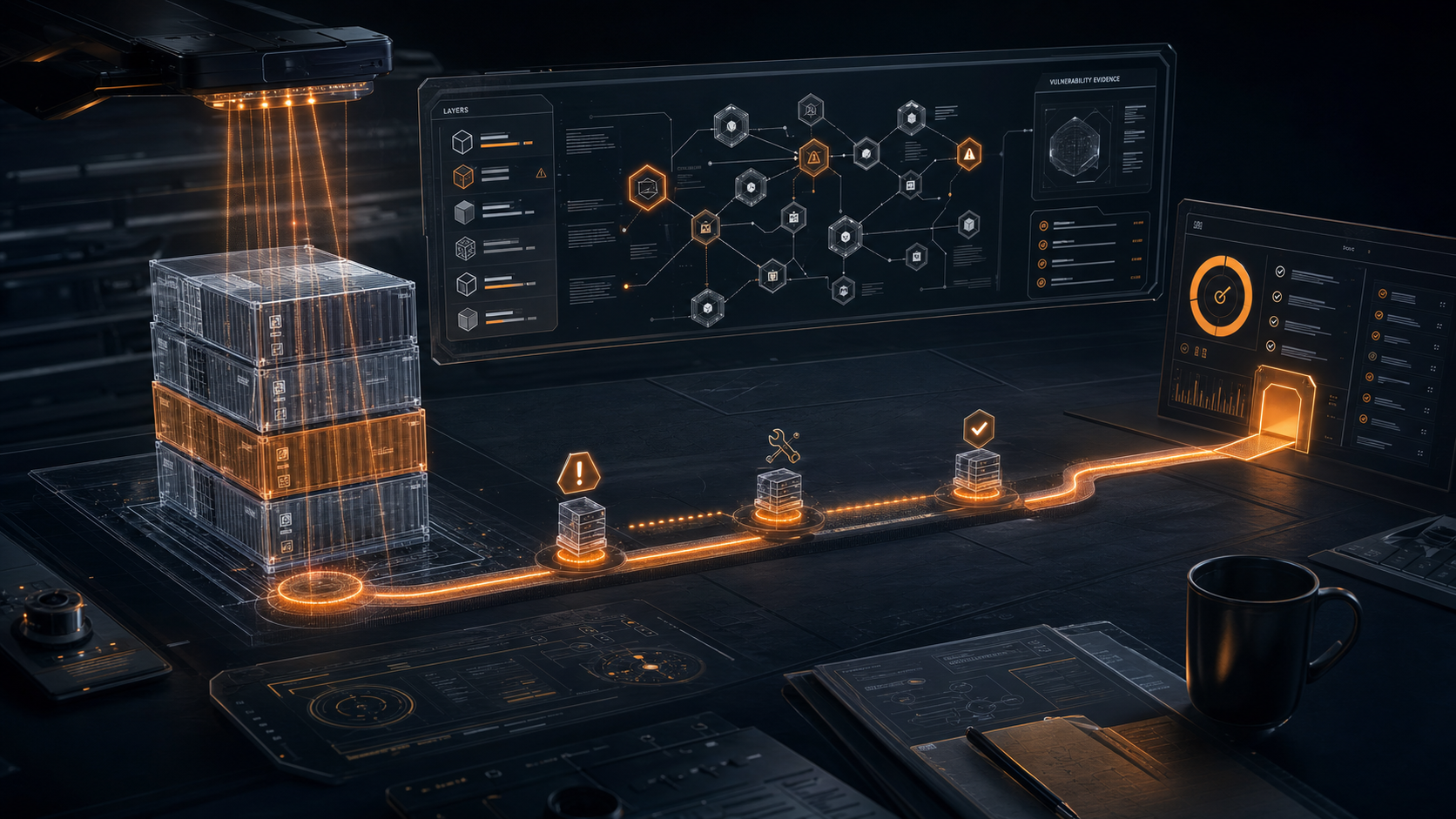
Table of Contents
Most founders discover container vulnerability scanning at the worst possible moment: right before launch, during buyer due diligence, or after a customer reports something the team should have caught internally. If your product ships with AI coding tools, this is not a nice-to-have topic. It is a release decision.
The problem is not just that AI writes imperfect code. It is that AI often writes code that looks finished, passes basic tests, and still hides security or product-logic mistakes. A generic review can catch obvious syntax issues. It may miss the failures that block revenue, leak tenant data, or break trust with buyers.
That is why AbyssGuard treats container vulnerability scanning as an evidence workflow. You do not need more noise. You need proof, prioritization, and fixes you can apply before the next customer-facing release.
What container vulnerability scanning should actually catch
If your stack includes code written in Cursor, Claude Code, Replit, Bolt, Lovable, v0, or similar tools, your risk profile changes. The highest-value issues are often not deep zero-days. They are production-critical implementation mistakes hiding in normal app code.
A useful review should catch missing authorization checks where authenticated users can access admin or cross-tenant data. It should catch webhook handlers that trust inbound requests without verifying signatures. It should catch pricing or permission logic enforced in the client instead of the server. It should catch token exposure patterns, unsafe file uploads, weak reset flows, and AI tool-execution paths that can be triggered without proper restrictions.
Generic checks vs an AI-built-app review
Generic scanners are useful, but they often optimize for dependency findings, style issues, or broad best-practice lists. AI-built apps need a sharper standard. The review has to connect findings to launch risk, buyer trust, and the exact workflow that produced the code.
- Auth boundary: Can one user reach another user's project, report, billing state, or private repository data?
- Payment trust: Are prices, plans, discounts, and entitlements enforced server-side?
- Webhook proof: Are signatures, replay behavior, and failure paths handled before provider events change state?
- Secret exposure: Are tokens, keys, mobile config, logs, and generated files checked before release?
How AbyssGuard turns this into a workflow
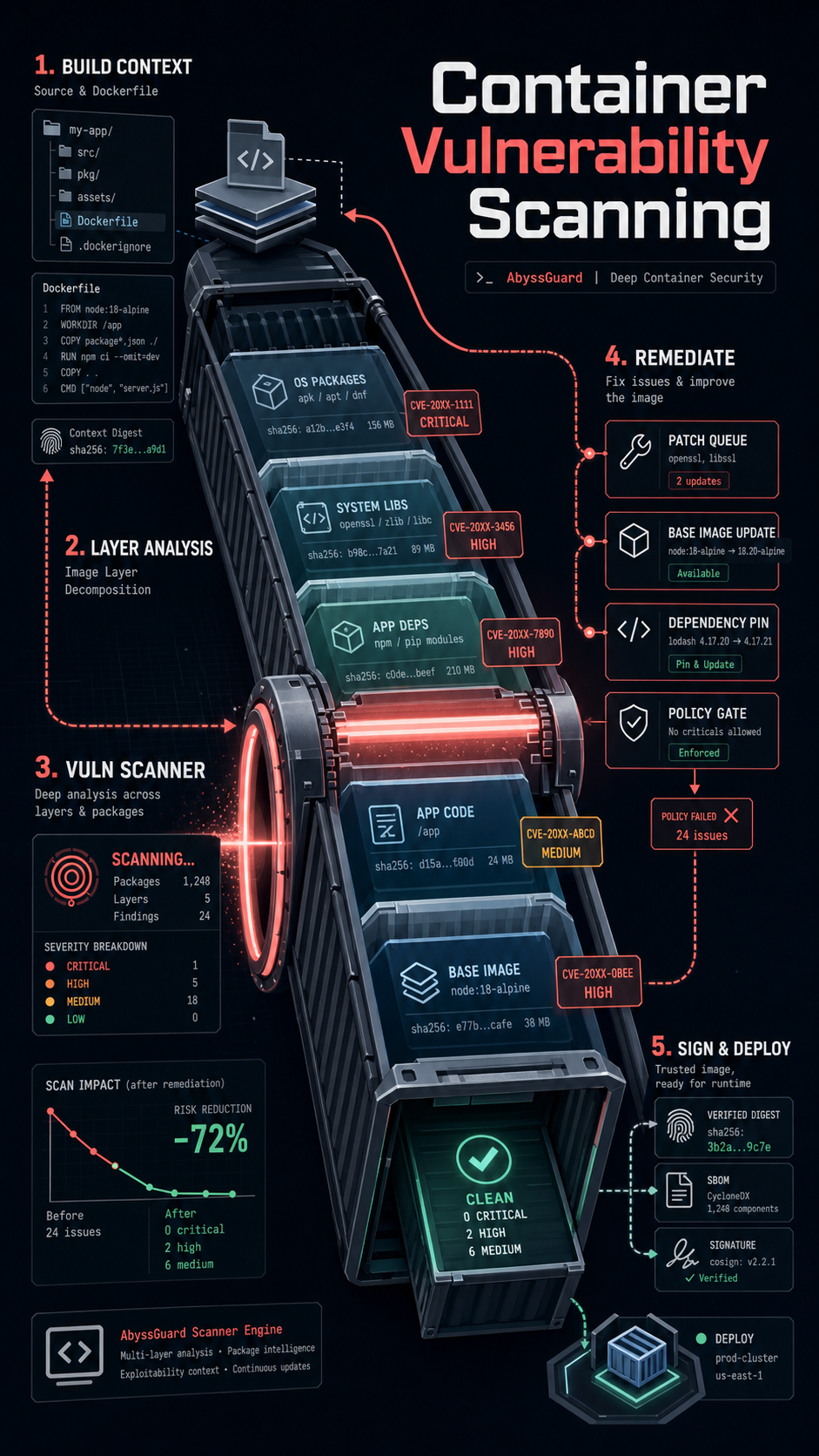
AbyssGuard is useful because it does not stop at a scary list. The workflow is simple: scan the code, review prioritized findings, apply a repair packet, verify the fix, and keep monitoring as AI-generated code changes.
For container vulnerability scanning, the goal is not to sound secure. The goal is to leave the founder with evidence they can use: what failed, why it matters, how to fix it, and what proof shows the release is safer.
FAQ
Is this only for teams using AI coding tools?
No. The same checks matter for any SaaS product. AI-assisted teams just hit the risk faster because the product surface grows quickly.
Can a scanner prove the app is secure?
No. A scanner can produce useful evidence and catch important mistakes. It should not claim certification or perfect safety.